> For the complete documentation index, see [llms.txt](https://docs.meta-inf.hu/advanced-content-navigator/llms.txt). Markdown versions of documentation pages are available by appending `.md` to page URLs; this page is available as [Markdown](https://docs.meta-inf.hu/advanced-content-navigator/cloud-users-guide/panels/page-history.md).
# Page History
This page describes how to view the changes history of the pages
### The Page History Panel
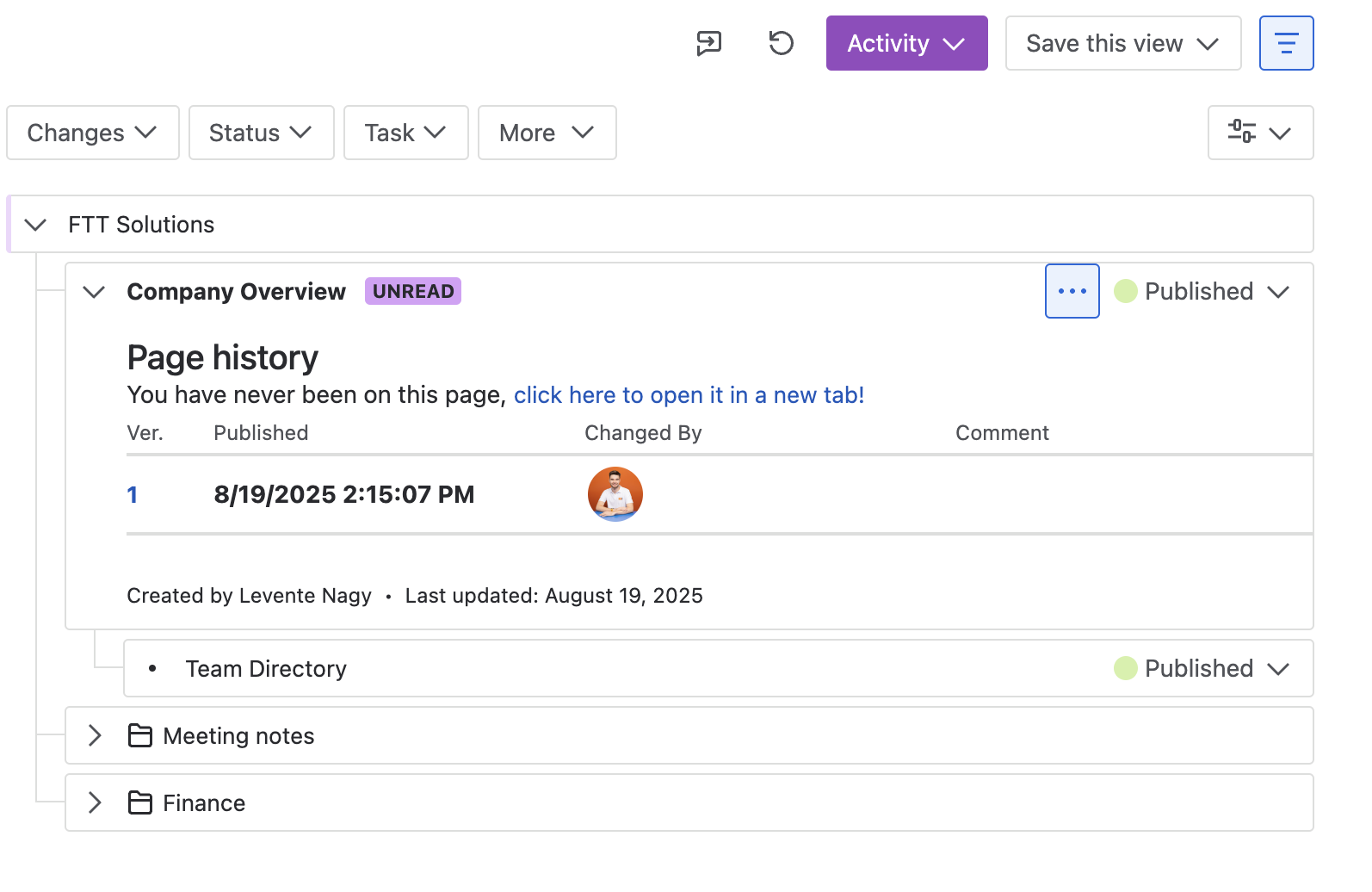
Keeping control over rapidly changing documentation is challenging in itself. Confluence keeps track of every change by creating a new version of the page in the [page history](https://support.atlassian.com/confluence-cloud/docs/create-edit-and-publish-a-page/#Page-versions-and-history). It is accessible from the page tree by opening the Page history panel from the context menu.
### Finding *What* has Changed
After finding the [pages that have changed](/advanced-content-navigator/cloud-users-guide/show-changes-of-pages.md), the next big thing is to figure out what exactly has changed. This is where the app's smart page history comes into play with its What's changed since you last visited link.
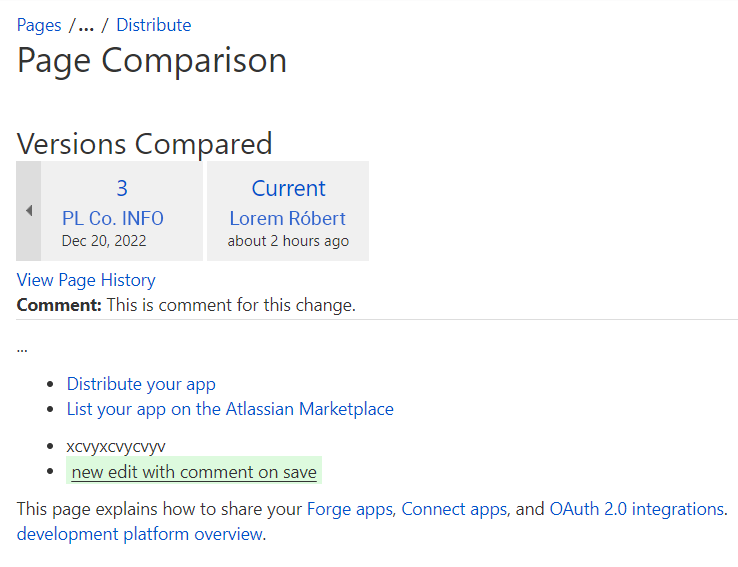
This link intelligently determines the last page version the current user has seen and compares it with the current version of the page in Confluence's Page Comparison view.
Compare the last seen version to the current one
The Page History Panel recognizes pages you have not yet opened at all (pages new to the user) and shows a link in the history to open the current version of the page.